Los Angeles seduces plants the same way it seduces people: with light. Three hundred days of it, pouring through steel-framed windows and bouncing off white stucco until whole rooms glow. It looks like paradise for anything green. It is closer to a desert wearing paradise's clothes — and knowing the difference is most of what separates a thriving collection from a slow, expensive cycle of replacement.
The light here is not the light the houseplant industry designed for. The plants sold in every nursery in America were grown for a national average — a softer, wetter, more forgiving sun. Los Angeles light is high-UV desert light filtered through marine haze, arriving in rooms with fifteen percent humidity and an air-conditioning vent in the ceiling. Treat it generically and it will burn a fiddle-leaf fig in a season. Read it properly and it will grow you a jungle.
The south window: a gift and a trap
Every listing in this city brags about southern exposure, and for good reason — a south-facing room in Los Angeles receives more usable plant light than almost any interior in the country. But the same window that feeds a strelitzia will cook a calathea at four feet and bleach a monstera at six. Glass concentrates heat while stripping some of the spectrum plants use most efficiently, so leaves near a hot pane experience something no forest ever prepared them for: intense radiation with none of the humidity that usually accompanies it.
The trap is placement, not the window itself. The first meter from a south pane belongs to the desert dwellers — succulents, sansevieria, ponytail palms — plants that read blazing glass as home. The sweet spot from one to three meters back is where the tropical showpieces live their best lives. Past four meters, that same bragged-about room quietly becomes medium light, and choices need to change again.
A plant does not experience your room the way you do. It experiences a single spot in it, hour by hour, season by season.
Reading a room like a curator
When we assess a space, we map it in four exposures. South is volume — the most light, the most heat, the most risk. East is the gentlest room in the house: cool morning sun that flatters almost everything, from ferns to fiddle-leafs. West is the furnace — afternoon light arrives pre-heated, and only structural, thick-leafed species should take it head-on. North, the exposure everyone apologizes for, is actually a gallery: steady, shadowless light that keeps dark-leafed aroids, aspidistra, and ZZ plants looking composed year-round.
Then we watch the light move. Los Angeles has a seasonal rhythm people forget indoors: the June marine layer can mute a west-side morning for weeks, while October delivers the clearest, harshest light of the year through a lower sun angle that reaches deeper into rooms. A placement that worked in gloom can scorch by Halloween. The plants aren't failing; the light moved.
The species that hold
For the bright, hot zones: giant bird of paradise, which treats a double-height south window like the Transvaal; olive trees and podocarpus where doors open often enough to move air; succulent compositions that want exactly what the glass gives. For the middle distance: monstera, ficus Audrey and lyrata (with rotation), philodendrons, rhaphidophora — the canopy plants, evolved for bright but broken light. For the quiet north rooms and corridors: aglaonema, aspidistra, ZZ, the tougher ferns. Not one of these lists is exotic. The craft is not in rare species; it is in refusing to put the right plant in the wrong meter of the room.
The microclimates nobody sees
Two more forces shape survival here, and neither shows up in a photograph. The first is conditioned air: a supply vent above a plant is a desert wind machine, drying leaf tissue faster than roots can replace it. We move plants out of the airstream before we ever adjust a watering schedule. The second is reflection — pools, white walls, and pale hardscape bounce meaningful light onto terraces and into rooms, which is why a technically shaded LA patio often grows sun-lovers beautifully.
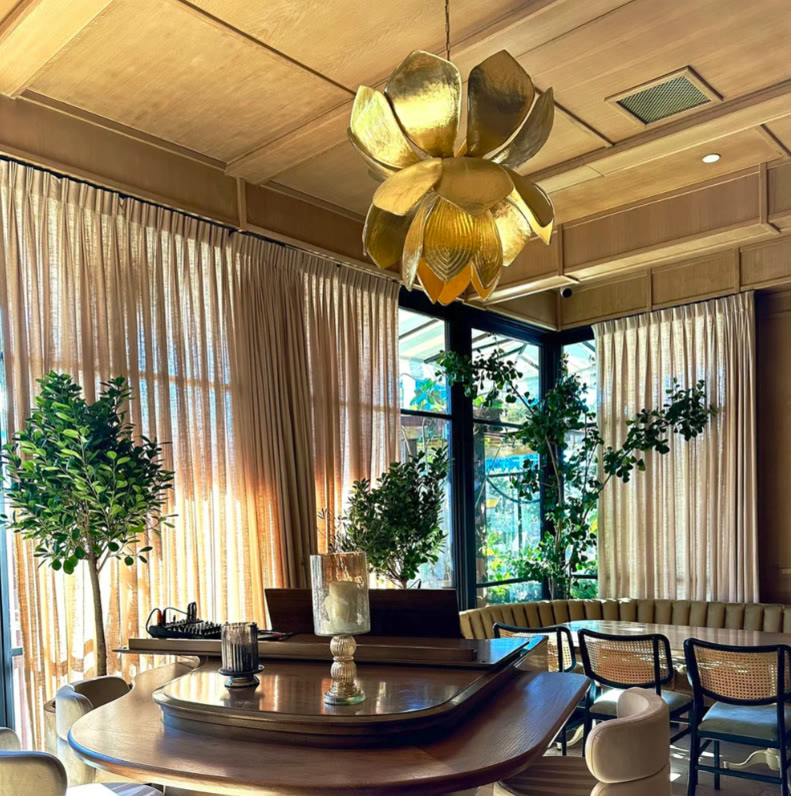
Sheer curtains, for the record, are the most underrated tool in this city. A single layer of linen turns a punishing west window into a perfect bright-indirect studio — the difference between light a leaf can use and light it merely endures.
Water follows light — never the calendar
The most common casualty pattern we see in Los Angeles is not underwatering; it is watering on a schedule written for a different room. Light is the engine of a plant's thirst. The strelitzia drinking hard in a blazing south bay window and the aglaonema idling in a north hallway may sit thirty feet apart, but they are living in different climates — and a single "water everything Sunday" routine will drown one while parching the other.
The correction is simple and permanent: let each placement dictate its own rhythm. Bright-zone plants in this city can dry out in four days in October's clear heat and take two weeks to dry in June gloom. Instead of dates, use the soil — a finger two knuckles deep, or the heft of the pot in your hand — and expect the answer to change with the seasons the same way the light does. When we hand a space back to a client, the care card we leave is organized by light zone, not by species, for exactly this reason.
A quick audit you can run this afternoon: stand where each plant stands at three o'clock. If you'd want sunglasses, so would a calathea. If you could read comfortably without a lamp, most canopy tropicals will hold. If the page looks dim, you're in aspidistra country — and no watering schedule will change that.
Match the biography
Every species carries a biography — the light of the forest floor, the canopy gap, or the open scrubland it evolved in. Every room in Los Angeles offers a specific rewrite of that story. Our work, reduced to one sentence, is matching biographies: putting a plant where the room retells the light it already knows. Do that, and survival stops being the goal. The plants don't just live here. Like everyone else who moved for the light — they flourish.
— Maia Flora, Los Angeles